



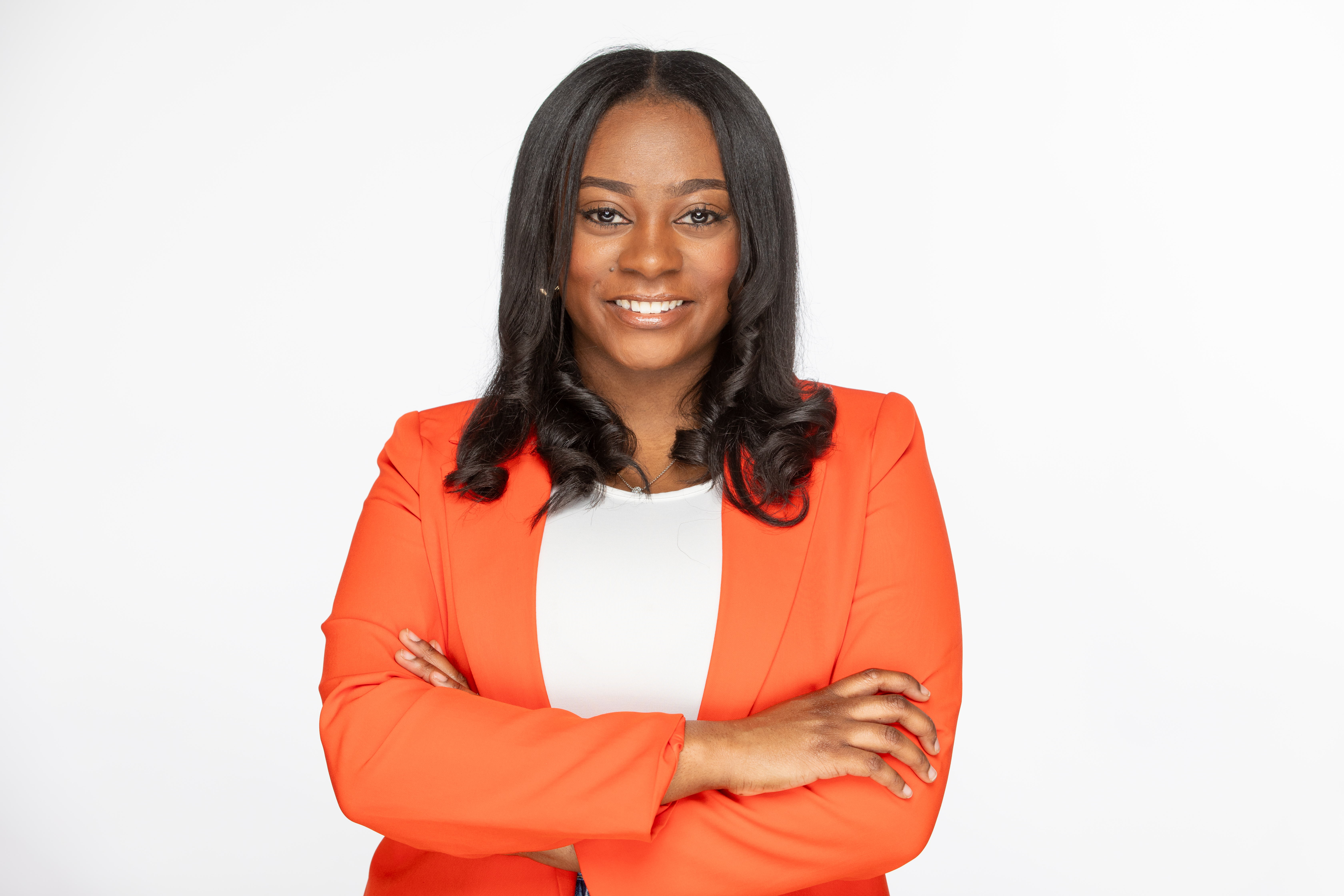
Diamond Spratling, MPH (she/her), is an acclaimed environmental health and justice activist, storyteller, and international public speaker. In 2019, she founded Girl Plus Environment, a non-profit dedicated to empowering Black and Brown women and non-binary individuals to champion climate and environmental justice in their communities.
A Detroit native, Diamond has over a decade of experience at the intersection of environment and health, earning numerous recognitions including the Yale New Horizons in Conservation Award and 40 under 40 Young Gifted and Green. Her global impact includes projects with Bloomberg Associates, CDC, and the City of Atlanta, among others.
For Environmental Justice Week, we asked Diamond to share her story and the principles guiding her efforts as she prepares for her event at Climate Week NYC.
1. What is the main focus of your organization and why?
My work is not focused on a specific environmental justice issue. To me, they are all interconnected — whether we're advocating for clean air, demanding energy-efficient homes to keep us cool in the summer and warm in the winter, or yearning for green spaces and walkable neighborhoods. Regardless of the issue, it is critical that the solutions are rooted in environmental justice principles and that the intersectionality of environmental justice is clearly communicated. It's essential that we approach each issue with an understanding of how they impact marginalized communities differently and ensure that our strategies and solutions are inclusive, equitable, and representative of those most affected.
The main focus of my work is to ensure that climate and environmental solutions prioritize the needs of marginalized communities that have been historically and disproportionately impacted.
That requires increasing the representation of marginalized communities in all aspects of the climate justice movement. We must shift the narrative and be more intentional about how we communicate climate issues. We need to create more opportunities for marginalized individuals to secure quality jobs in the clean energy sector and mobilize our communities to advocate for safe drinking water and stricter regulations on landfills. It is crucial to ensure that marginalized communities are given a central role in the decision-making process. Only if we center our work around these principles, are we able to build a just and inclusive approach to tackling durable climate change.
2. What are the biggest obstacles you encounter in your work, and how do you navigate them?
The biggest obstacles revolve around gaining access to organizational resources so that Girl Plus Environment can adequately support our community of Black and Brown women. The challenge is not in the work itself — we know how to engage our community effectively, and they are very receptive to our efforts. However, while the demand for our support is high, we often lack the resources to fully meet their needs and enable their full participation in the climate movement.
The climate sector has gained significant attention and become trendy, which is exciting. However, this increased interest has made it more difficult for environmental justice organizations to secure necessary funding. Sectors like construction, tech, and retail are now vying for climate funding, reflecting the intersectional nature of climate issues and the need for broad involvement. Despite this, it has become more challenging for smaller environmental justice organizations like ours to access federal funding opportunities such as the IRA and IIJA.
To navigate this, we focus on building strong relationships with our community and stakeholders, demonstrating the unique value we bring to the climate movement. We also strive to diversify our funding sources and advocate for more inclusive funding policies that recognize the critical role of environmental justice organizations. By continually raising awareness about the importance of equitable climate solutions and the need for targeted support, we work to ensure that our community can fully engage and benefit from the climate movement.
3. Can you share a success story where your organization made a significant impact on a community facing environmental challenges?
In 2022, Girl Plus Environment launched the Protecting Our Energy Project, which hosts free training programs for young women of color interested in learning best practices on climate and environmental justice in their local communities. Since its inception, we have facilitated energy justice ambassador trainings, helping more than 50 womxn of color in Atlanta communicate and empower their communities to advocate for clean, affordable energy policy for the state of Georgia.
By the end, 89% of participants felt confident discussing energy justice with their community, a significant increase from the 6% who felt confident before the start. We reached over 10,000 people and distributed more than $10,000 in energy bill stipends to over 50 single-family Black women households in Atlanta.
In addition to the trainings, participants actively engaged in the Georgia Power Rate Case by submitting public comments, participating in public hearings, and hosting their own community education events across Atlanta. This year's cohort will focus on Black women small business owners in Atlanta, equipping them with the training and resources to fully engage in the clean energy transition.
The significance of a program like Protecting Our Energy cannot be overstated. It’s a vital tool for empowering marginalized communities, particularly womxn of color, who have historically been underrepresented in the environmental movement. By providing education and resources, the program helps to build a more inclusive and equitable movement where diverse voices are heard and valued.
Furthermore, the program's focus on community engagement and advocacy fosters a sense of ownership and agency among participants. It enables them to take proactive steps in addressing environmental challenges, promoting local leadership and grassroots activism. The program's success also shows the power of collective action and the importance of community-driven solutions. By equipping people with the knowledge and skills to advocate for clean and affordable energy, the Protecting Our Energy Project not only addresses immediate energy needs but also contributes to the long-term sustainability and resilience of communities.
4. With Climate Week NYC approaching, what is the one thing you hope to see regarding environmental justice?
I hope to see more conversations rooted in environmental justice solutions, particularly those that are solutions-based rather than merely sharing information about the issue. We all recognize that climate change is happening and that it has numerous socio-economic and health implications.
The true value of coming together lies in the opportunity for meaningful collaboration and idea-provoking discussions. Learning about successful solutions piloted across the world can be incredibly valuable.
Moreover, I aspire to participate in more intersectional conversations. It's common for tech founders to attend tech events and climate storytellers to join storytelling events, but that creates silos within the movement. I hope to engage in spaces where I can connect with and learn from a diverse spectrum of people who all share the common goal of climate justice. By bridging these gaps, I feel that we can come closer to fostering a more inclusive and effective movement rooted in justice.